



Taking a systems-led approach to mining is not new, but being able to evidence the benefits of it through data, visualisation and simulation is. That is what MasterMined is out to achieve.
As the company’s presentation deck states, mines are optimised discipline by discipline.
“Geology, geotech, mine design, development, materials handling, ventilation, infrastructure and production are each planned carefully and separately,” it states. “The losses appear between them. Bottlenecks that no single discipline owns. Schedules that do not reconcile. Capital committed to relieve a constraint that actually sits somewhere else in the system.”
MasterMined works to optimise the system, not the parts of it.
Miner-to-miner
This message would fall on deaf ears if it wasn’t coming from a place of industry understanding; one that recognises the day-to-day operational hurdles mines need to jump over, the incentive packages that encourage siloed approaches on site and the prevalence of short-term thinking to meet monthly and quarterly budgets.
Tony Sprague, CEO and Managing Director of MasterMined, knows all of this from his time at Newcrest Mining and, before that, at Rio Tinto, Fortescue, Kalgoorlie Consolidated Gold Mines and Barrick.
He is undoubtedly a mining technology advocate, but he knows the realities associated with implementation, having worked all over the globe and in operational and headquarter-based roles, speaking to site-based personnel and handling the change management involved in bringing new technology and new thinking to the fore.
He formed MasterMined in late 2023, with the company initially taking on ‘mine transformation uplift’ programs, technical support troubleshooting, strategic value uplift studies, as well as more conventional expert advisory tasks.
At this point, the company was providing advice and using vendor platforms to convey changes, using vendor-led solutions that teams were familiar with.
“The slogan, ‘Smarter. Leaner. Greener,’ was underpinned by putting the right people on the job to lead that team and affect change,” Sprague said. “Clients were backing our team to deliver.”
This worked on the initial work programs, but Sprague always wanted that slogan to be matched by not just a passion for solving problems, but also a portfolio of software-led products.
Three integrated layers
The company, which now runs a small permanent core and draws on a bench of 15-20 specialists, has that in the form of FlowCycle , GreenLeap and the most recent addition, OreMaster. Together they put the slogan into practice, Sprague said: “OreMaster makes the mine plan smarter, FlowCycle makes the operation leaner and GreenLeap makes materials handling greener.”
FlowCycle is an operational uplift tool for underground development and production, fed back to OreMaster. It simulates the development and production cycles in detail, and measures the effect of different practices, technologies and methods within the system. “It shows where the schedule loses time: bottlenecks, possible uplift and design problems,” the company said, with the results going straight back into OreMaster for a re-optimised plan.
MasterMined targets a 15-20% uplift from the same fleet and resources as part of FlowCycle projects.
GreenLeap simulates the whole materials handling system on open-pit or underground mines with physics-based models. This includes the fleet, ramps and declines, ore passes, crushers, conveyors, shafts and hoisting. It also simulates the energy use, heat load and the ventilation demand that follows, while it offers OEM-independent comparisons of diesel, battery-electric, hybrid and trolley solutions.
OreMaster, which interacts with both of these, goes from the block model to the cost model. Designed around AI from the ground up, not with AI added on later, it was built in-house by the engineering team at MasterMined. “AI does the heavy lifting, building, scheduling and costing many options far faster than a planning team could,” the company said. “The design inputs and assumptions are transparent, and the same cost model is applied to every option, so the client can see exactly why one option beats another,” Sprague said.
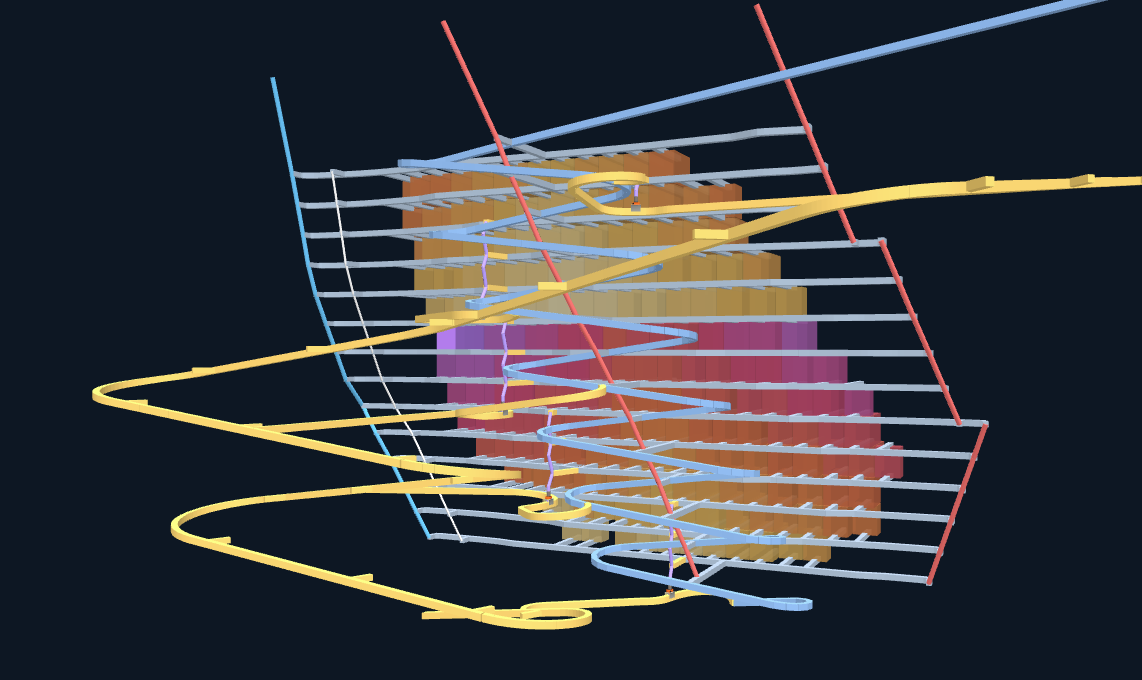
OreMaster’s brain – more than 1,000 “rules” growing across all mining methods that Sprague and his team have embedded in the system – keeps the plan on track, with MasterMined engineers signing off the plan. It covers stoping, sub-level caving, block caving and open-pit operations. The design is granular, featuring stopes, levels, declines and portals, ventilation and escape routes, level development and ore handling. Every option is checked on true 3D geometry before it is valued, as well as the mine plan being tested against the process plant, paste fill, infrastructure and the materials handling system, the company said.
“No other system links design, mining, materials handling, processing and backfill like OreMaster does.”
Granular gains
All these solutions are in play at operations owned by some of the biggest Tier 1 mining companies in the world, with one Tier 1 client running OreMaster with GreenLeap and another Tier 1 client running FlowCycle with GreenLeap. A further client is lining up to use all three together, to investigate, simulate and optimise mine development, stope production and the materials handling system as one, Sprague said.
GreenLeap is used by many of the major miners for studies and operational assessments, according to Sprague, who believes this platform is of vital importance when it comes to providing a true assessment of diesel-powered alternatives in the mobile equipment sector.
“We work closely with OEM R&D teams and battery module suppliers to give our clients the best simulations,” he said. “We have found OEMs are keen to make sure their fleet options are modelled correctly, with the database we have built across a wide range of open-pit and underground assessments growing by the day.”
The same simulations, when matched with OreMaster’s capabilities, can also provide a granular assessment of where to automate loading and haulage operations.
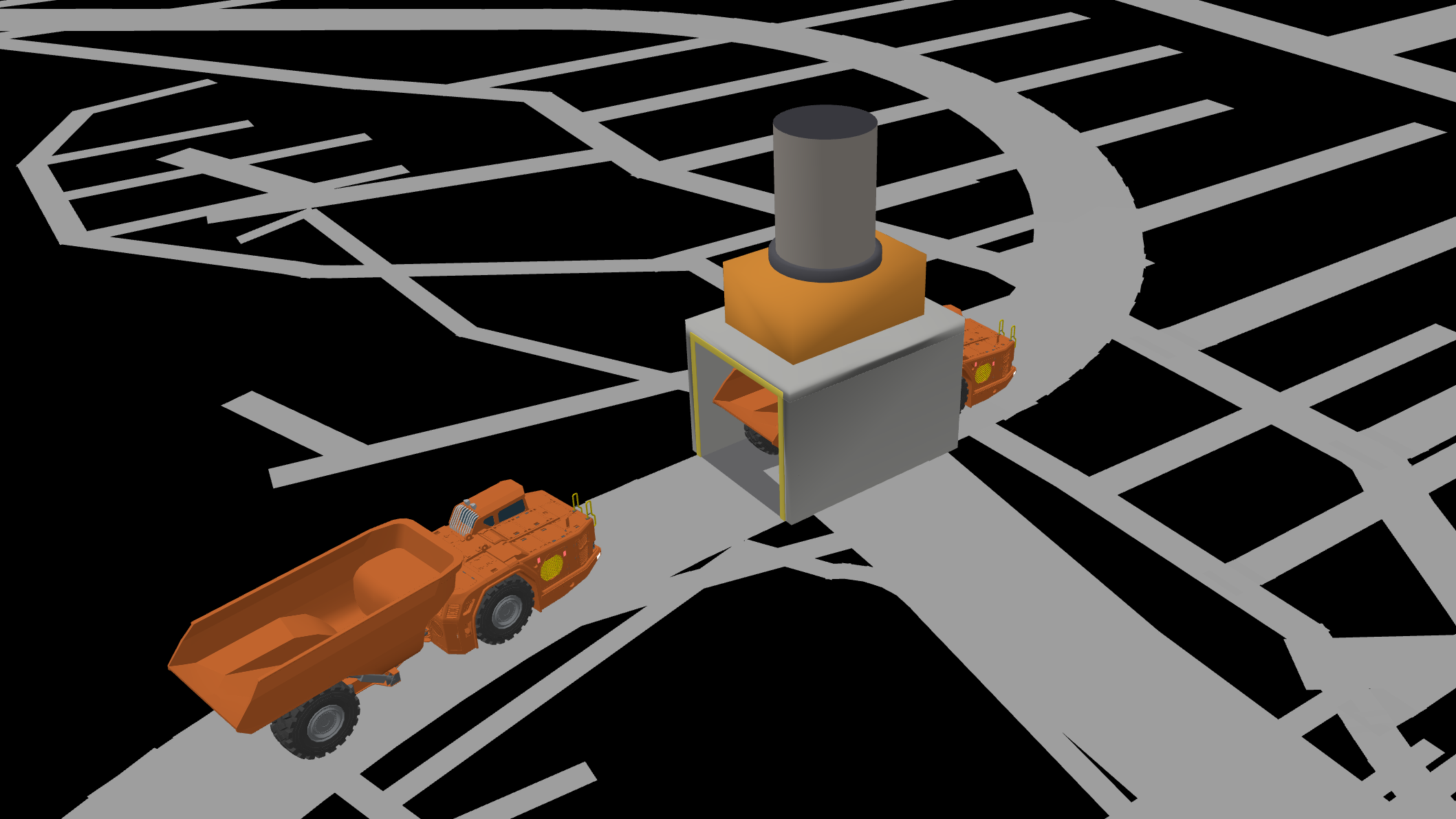
“For a big underground stoping operation where you’ve got a lot of work that needs to happen, you need to know where your automation zones will be and ensure your stope preparations reside outside the laser barriered loader automation zone,” Sprague said. “OreMaster can run a number of scenarios and schedules to analyse the options and cost them at the same time, allowing the mining engineers to sign off on their validity.”
This is all for operational planning, but Sprague is also looking to relieve the everyday stress operations are under to deliver to target too, with FlowCycle. It doesn’t matter which mine you go to nowadays, everyone’s suffering and has been for the past decade,” he said. “Productivity is going down, development cost is going up and mines are rarely hitting their annual budgets.
“Most operations can’t even stop to talk to you. They’re in such a hurry because the place is like a house of cards, and they don’t want it to fall down.”
This makes employing a new solution like FlowCycle tricky, but Sprague is confident it can alleviate some of the issues the operation is dealing with, by uncovering the true cause of the instability, missed targets and sub-optimal outcomes.
By combining mine simulation, Theory of Constraints and Lean with operational mining experience, the company strives for a step change of some 15-20% improvement, rather than an incremental gain.
This involves drawing up three “states” in one particular order:
- State 1: A calibrated model of how the mine actually develops and produces, built from its own data. The site signs it off before anything is compared with it.
- State 2: The same mine, the same fleet and the same crews, run on FlowCycle operating logic. Nothing is bought or replaced.
- State 3: Improvement initiatives: new equipment, ground support systems, work practices, automation. Each one quantified in dollars per metre against a stable base, where the result can be read.
Understanding the culture and engaging teams at site are a big part of MasterMined’s FlowCycle work, but Sprague said the operation teams the company is working with to achieve a 15 to 20% uplift in productivity from the same fleet and resources are showing positive signs of sustaining long-term gains.
“The stability the first phase delivers is just as important,” he said. “It is the foundation for the real uplift that follows, once the site is ready, willing and has the bandwidth to take on new work practices and technology, and make them stick.”
Taking a step back from the day-to-day and reconsidering how work can be optimised is part of MasterMined’s philosophy, which Sprague seriously hopes the mining sector starts buying into.
“The old way – one discipline at a time on assumed rates for productivity, fleet and cycle times – is putting new projects at risk,” he said. “I think the tools we now have enable us to punch way above our weight when it comes to engineering and consulting firms, and enact real change in the sector by following that systems-led approach.”
The post MasterMined intent on showcasing mining’s operational potential appeared first on International Mining.